For the length use Pythagoras's theorem: r = sqrt(x^2 + y^2)
For the direction, the angle to the horizontal is given by theta = tan-1(y/x)
.
I'm not sure this is actually simplifying anything, but you could do the following:
\(x=2^{1/3}3^{1/4} \\ x^{12}=432 \\ x=432^{1/12}\)
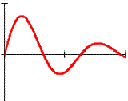
No, in general you can't invert the function to get x explicitly in terms of y. If you have a value for y, then you could numerically find a corresponding value of x depending on the range of valuea of interest. See the graph below:
The numbers don't stack up here. Even if they only sold night tickets, 2000 of them would come to much more than153900!!
If this is meant to be 3^(2[x+1]) - 8*3^(x+1) = 9 then:
Here are a couple of examples where it does just that:
742*1.013*10^5/760 = 9.89*10^4
Use asin (press the 2nd button first).
12 out of 60 is one fifth, so you need to calculate one fifth of 1450.

 +33669


