This would be 3*(0.8^2810) = not much wood left!
Approximately 95.45% falls within 2 standard deviations of the mean.
This is true of any normal distribution, irrespective of the actual values of the mean and standard deviation.
.
1 mile = 1760 yards
1 square mile = 1760^2 square yards
1 township = 36 square miles = 36*1760^2 square yards
3.5 townships = 3.5*36*1760^2 square yards = 3.902976x10^8 square yards
Did you mean to put f(x) = 3x so f(2) = 3*2 = 6
h(x) = 2x - 7 so h(f(2)) = h(6) = 2*6 - 7 = 5
21000 = a + 100b (1)
126000 = a + 450b (2)
Subtract (1) from (2)
105000 = 350b
Divide by 350
b = 300
Put this back into (1)
21000 = a +100*300
a = -9000
Let the number be n
Then 5n - 6 = 7n
Subtract 5n from both sides
-6 = 2n
Divide both sides by 2
-3 = n (or just n = -3)
Since area = pi*radius^2 then radius = (area/pi)^(1/2) or radius = square root of (area/pi)
The vertex is where df(x)/dx = 0
df(x)/dx = -(2/3)x-5
This is zero when x = -15/2, at which point f(x) = -(1/3)(15/2)^2 - 5*(-15/2) + 2 = 83/4
so the vertex is at (-15/2, 83/4)
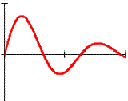
Something like this?
When x → 0, sin(2x) → 2x and e^(2x) → 1 + 2x so (g(x)*sin(2x) + e^(2x) - 1)/x → (5*2x + 1 + 2x - 1)/x → 12x/x → 12

 +33669
